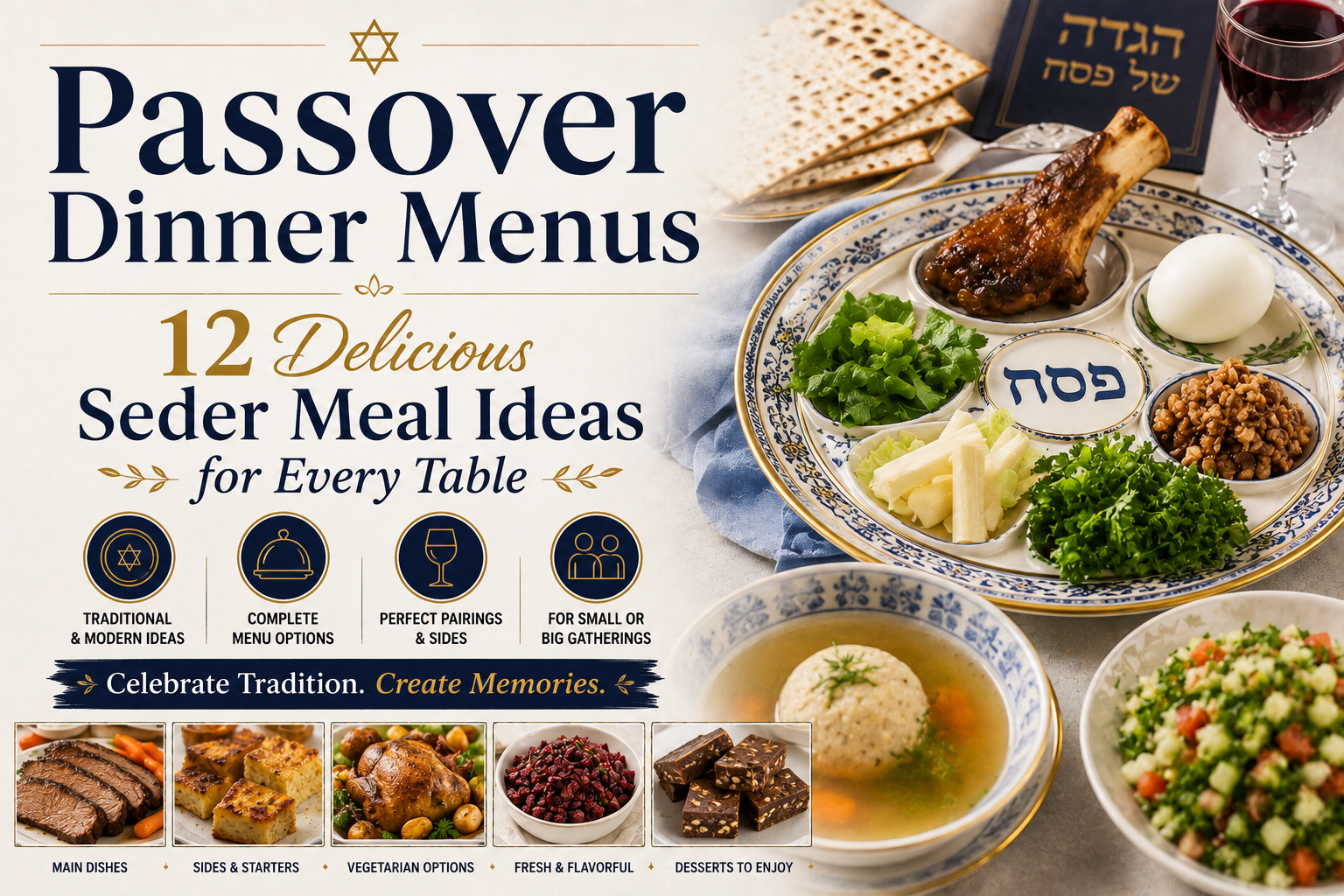
Passover Dinner Menus
Planning a Passover dinner can feel a little overwhelming at first. You want the meal to honor
tradition, feel special enough for the holiday, satisfy everyone around the table, and somehow
avoid keeping you in the kitchen all evening.
The good news is that a memorable Passover meal does not have to be complicated.
Some families look forward to the same brisket, matzo ball soup, charoset, and kugel every
year. Others prefer roast chicken, salmon, bright vegetable dishes, or updated versions of
recipes passed down through generations. There is no single Passover dinner menu that fits
every household.
That is exactly why this guide includes several complete Passover dinner menus, from
traditional Seder meals to easier, lighter, vegetarian, make-ahead, family-friendly, and elegant
options.
Whether you are hosting your first Seder, feeding a large extended family, or simply looking for
fresh Passover menu ideas, you can use these menus as complete meal plans or mix and
match individual dishes to create something that feels right for your celebration.
What Is Traditionally Served for Passover Dinner?
The Passover Seder is more than an ordinary holiday dinner. It combines storytelling, ritual,
symbolic foods, blessings, conversation, and a festive meal.
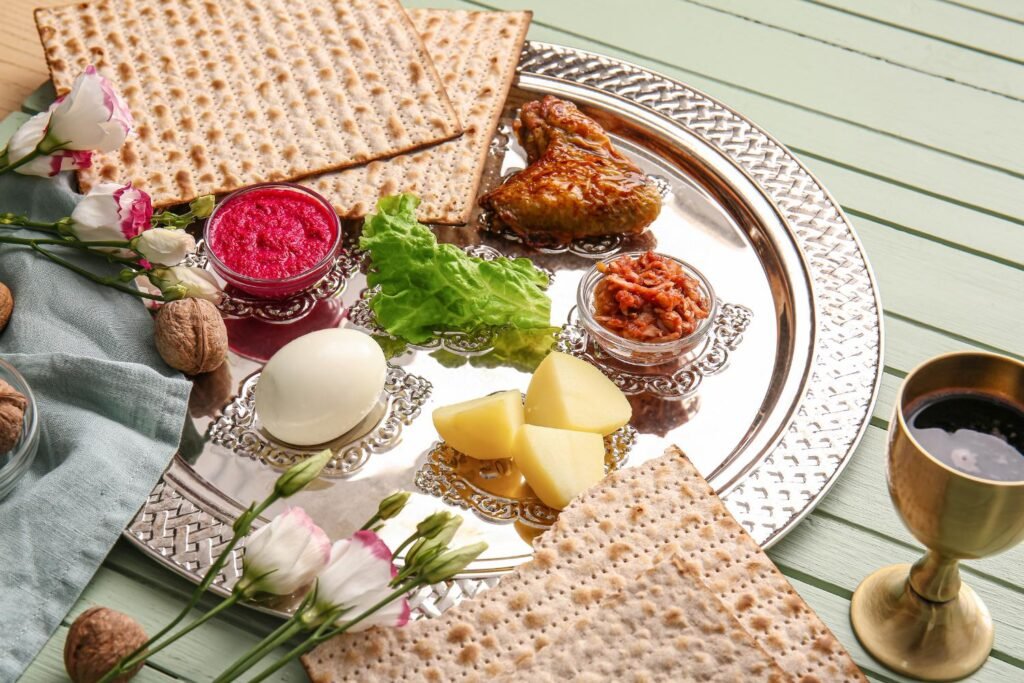
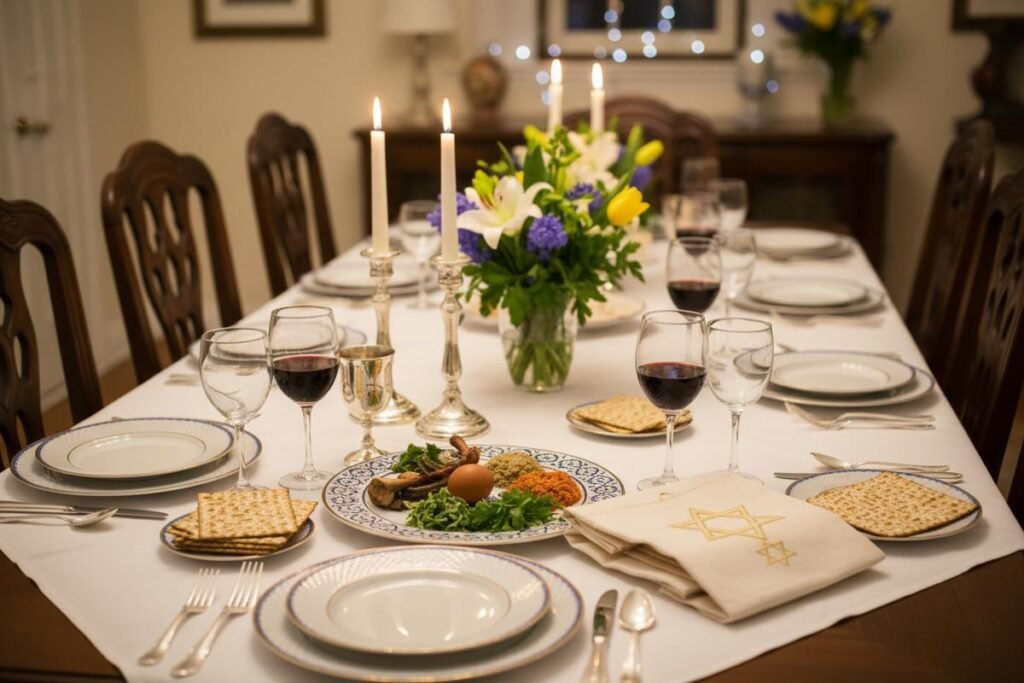
Traditional Seder elements include matzah, bitter herbs, charoset, vegetables dipped in salt
water, and wine or grape juice. The ceremonial foods are connected to the retelling of the
Exodus story, while the larger dinner served during the evening varies considerably between
families and Jewish communities.
An Ashkenazi-style Passover meal might feature gefilte fish, matzo ball soup, beef brisket, roast
chicken, potato kugel, tzimmes, vegetables, and a flourless dessert. Contemporary menus may
keep those traditions while adding roasted vegetables, citrus salads, salmon, herb sauces,
almond cakes, and other seasonal dishes.
The most important thing is not creating a restaurant-sized menu. It is choosing dishes that fit
your family’s traditions, level of observance, guest preferences, and the amount of cooking you
realistically want to do.
Traditional Passover Foods to Know Before Planning
Before deciding what to cook, it helps to separate the ceremonial Seder foods from the larger
dinner.
Matzah is one of the most recognizable foods associated with Passover. Charoset, usually
prepared with fruit, nuts, spices, and wine or grape juice, appears on the Seder table alongside
bitter herbs. Other symbolic elements are also included according to Seder tradition.
Once the ritual portions of the evening have been observed, families may serve anything from
chicken soup and brisket to fish, salads, roasted vegetables, potatoes, kugel, and desserts.
Passover food practices can vary significantly. Chametz includes leavened products associated
with wheat, barley, rye, oats, and spelt. Many Ashkenazi communities also avoid kitniyot, a
category that can include rice, corn, legumes, and certain seeds, while Sephardi customs may
differ. When preparing food for observant guests, check family customs and use appropriate
kosher-for-Passover ingredients and certification rather than assuming that every naturally
gluten-free ingredient is suitable.
With that foundation in mind, here are complete menus you can actually build your dinner
around.
Classic Traditional Passover Dinner Menu
If your guests expect familiar flavors when they sit down for Seder, a classic menu is usually the
safest place to begin.
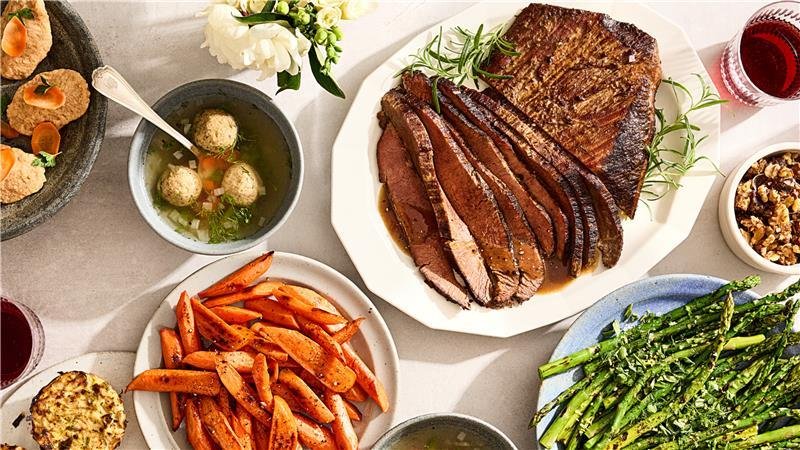
Start the meal with traditional matzo ball soup. A clear, deeply flavored chicken broth with tender
vegetables, fresh dill, and fluffy matzo balls feels comforting without competing with the richer
main course.
For the centerpiece, serve slow-braised beef brisket with onions, carrots, garlic, and herbs.
Brisket works especially well for Passover because it feels celebratory and can usually be
prepared ahead of time.
Serve potato kugel alongside the brisket for something crisp around the edges and soft in the
center. Roasted carrots or traditional tzimmes bring sweetness and color to the plate, while a
simple green vegetable such as asparagus or green beans can keep the dinner from feeling too
heavy if those ingredients fit your household’s customs.
Finish with flourless chocolate cake, fresh berries, or coconut macaroons.
This is the kind of menu guests recognize immediately as a comforting holiday dinner.
Menu combination: Matzo ball soup, braised brisket, potato kugel, roasted carrots or tzimmes,
seasonal green vegetables, and flourless chocolate cake.
Easy Passover Dinner Menu for First-Time Hosts
Hosting your first Passover dinner does not mean you need to prepare ten complicated recipes.
Choose one impressive main course and keep everything else simple.
Roast chicken is ideal because it needs much less hands-on work than many elaborate holiday
dishes. Season it generously with garlic, lemon, parsley, thyme, salt, pepper, and olive oil, using
ingredients appropriate to your Passover observance.
Pair the chicken with crispy roasted potatoes and a large salad made with leafy greens,
cucumber, radish, herbs, and a bright lemon dressing.
You can serve prepared kosher-for-Passover matzah with charoset before dinner and make a
simple homemade soup if you have time. If not, focus your effort on the main meal.
For dessert, baked apples with cinnamon and chopped nuts are easy, warm, and comforting.
The key to this easy Passover dinner menu is restraint. Four well-prepared dishes will usually
feel more enjoyable than eight dishes that leave the host exhausted.
Menu combination: Charoset and matzah, lemon-herb roast chicken, crispy potatoes, fresh
spring salad, and cinnamon baked apples
Make-Ahead Passover Dinner Menu
A make-ahead menu may be the smartest choice when you want to participate in the evening
instead of constantly checking the oven.
Brisket is especially useful here because braised meats often develop deeper flavor after resting
in their cooking liquid. Prepare it before the Seder, refrigerate it properly, and reheat it gently
before serving.
Matzo ball soup can also be separated into components. Prepare the broth ahead, form and
cook the matzo balls according to your recipe, and bring everything together when needed.
For sides, choose dishes that reheat well. Potato kugel, roasted root vegetables, and braised
carrots are far easier to manage than recipes that must be cooked at the last second.
Charoset is naturally suited to advance preparation and gives its fruit, spice, and wine flavors
time to come together.
Dessert can be completely finished before guests arrive. Flourless chocolate cake is an
excellent choice because it does not need complicated decorating.
With this menu, much of the stressful work happens before the dining room fills with people.
Menu combination: Charoset, matzo ball soup, make-ahead brisket, potato kugel, roasted root
vegetables, and flourless chocolate cake.
Passover Brisket Dinner Menu
Brisket deserves its own menu because, in many homes, it is not merely another main course. It
is the dish everyone waits for.
A good holiday brisket should be tender enough to slice easily while remaining moist. Slow
cooking with onions, carrots, garlic, herbs, and a flavorful braising liquid creates the rich sauce
people expect from the dish.
Because brisket is substantial, pair it with sides that offer contrast.
A sharp herb salad or citrus-forward salad can cut through the richness. Roasted carrots bring
sweetness without adding too much weight, while smashed or roasted potatoes give guests the
comforting starch they expect from a holiday meal.
You can also serve horseradish alongside the beef for extra sharpness.
Instead of following a heavy main course with an equally heavy dessert, finish with fresh berries,
poached pears, macaroons, or a modest slice of flourless chocolate cake.
Menu combination: Fresh herb salad, slow-braised brisket, roasted potatoes, glazed carrots,
seasonal vegetables, and macaroons with fresh fruit.
Roast Chicken Passover Dinner Menu
Not everyone wants brisket, and that is where roast chicken becomes one of the most practical
Passover dinner ideas.
Chicken is familiar, versatile, easier to portion, and works with almost any vegetable side.
For a traditional flavor profile, roast the chicken with garlic, onion, carrots, lemon, and herbs. If
you want a slightly more contemporary meal, use preserved lemon, fresh parsley, rosemary, or
a sweet-and-savory glaze made with Passover-appropriate ingredients.
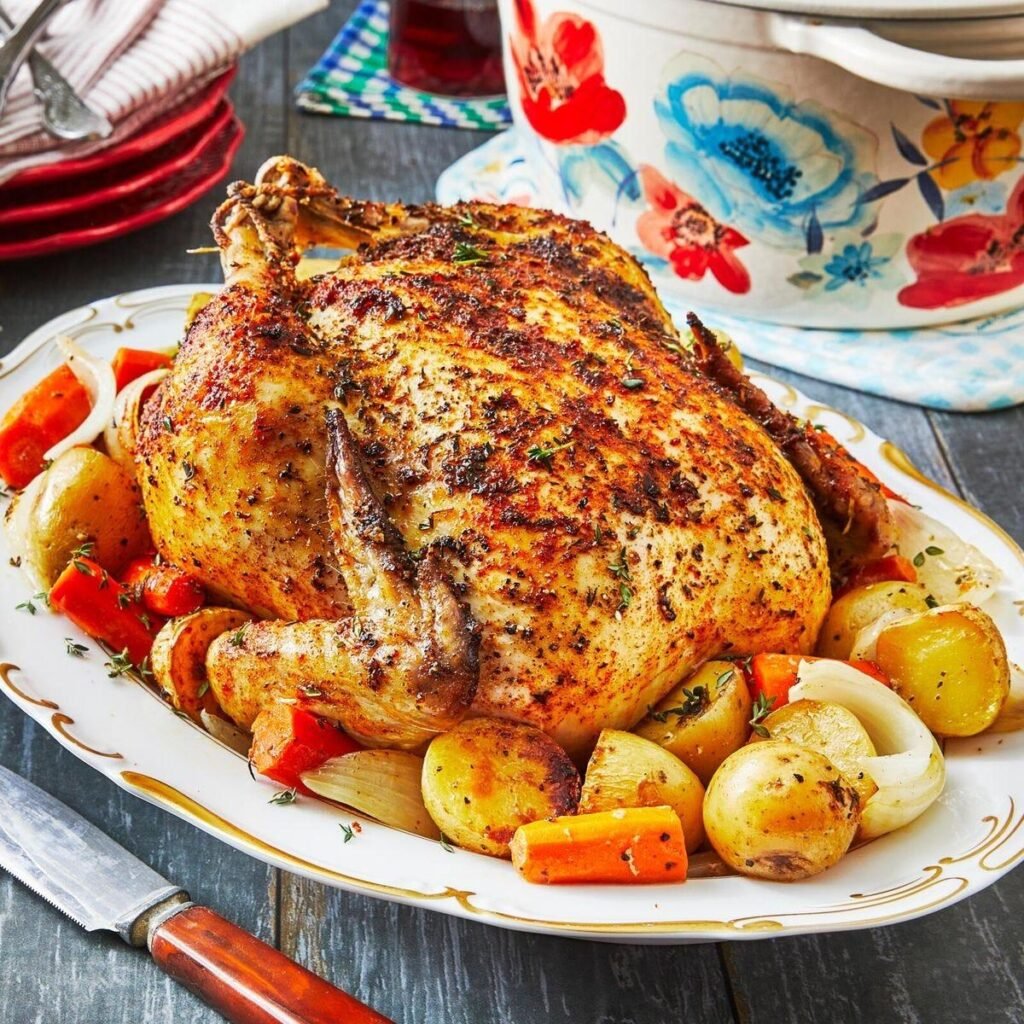
Serve the chicken with potato kugel or roasted baby potatoes.
A colorful tray of roasted carrots, zucchini, onions, or asparagus makes the table more inviting,
while a cucumber and herb salad provides freshness.
For dessert, serve almond cake with berries.
The result feels special enough for a holiday without being unnecessarily complicated.
Menu combination: Matzo ball soup, herb-roasted chicken, potato kugel, roasted vegetables,
cucumber herb salad, and almond cake.
Elegant Modern Passover Dinner Menu
Traditional food does not have to look old-fashioned.
If you enjoy entertaining and want your Passover table to feel more refined, build the meal
around familiar ingredients with cleaner presentation and brighter flavors.
Begin with a roasted beet salad arranged with citrus segments, fresh herbs, toasted nuts, and a
simple vinaigrette.
For the main course, choose pomegranate-glazed salmon, herb-roasted chicken, or a
beautifully sliced brisket served over its reduced braising sauce.
Pair it with roasted fingerling potatoes and asparagus with lemon.
Instead of placing every side in a heavy casserole dish, serve vegetables on large platters with
fresh herbs scattered across the top. This simple presentation immediately makes the meal feel
lighter and more contemporary.
For dessert, try a flourless chocolate torte with berries or an almond-orange cake.
This kind of Passover Seder menu preserves the sense of celebration while allowing the food
to feel modern and restaurant-inspired.
Menu combination: Beet and citrus salad, pomegranate salmon or herb-roasted chicken,
fingerling potatoes, lemon asparagus, and flourless chocolate torte.
Vegetarian Passover Dinner Menu
A vegetarian Passover meal can be just as satisfying as one centered around brisket or
chicken.
The secret is choosing a main dish with enough texture and substance to feel like an actual
centerpiece.
A stuffed vegetable dish works beautifully. Depending on your family’s traditions, you might
prepare roasted eggplant, stuffed peppers, portobello mushrooms, or a layered vegetable bake.
A potato and vegetable kugel can also become a substantial part of the meal.
Add roasted carrots with herbs, a beet salad, and a large platter of seasonal vegetables.
For protein, ingredient choices require more attention. Some vegetarian staples, including
beans, lentils, rice, chickpeas, and certain seeds, fall under kitniyot and are avoided by many
Ashkenazi families during Passover, while customs differ among Sephardi communities. Always
build the menu around the observances of the people who will actually be eating it.
Finish with chocolate-dipped fruit, coconut macaroons, or a flourless almond cake.
Menu combination: Charoset with matzah, roasted beet salad, stuffed vegetables or vegetable
kugel, herb potatoes, roasted carrots, and almond cake.
Sephardi-Inspired Passover Dinner Menu
Not every Passover table centers around Eastern European dishes.
A Sephardi-inspired menu opens the door to warm spices, herbs, citrus, vegetables, dried fruit,
fish, lamb, and regional family traditions.
Start with a selection of fresh salads or cooked vegetable dishes seasoned with lemon, garlic,
herbs, and spices.
For the main course, consider slow-cooked lamb, roasted chicken with dried fruit, or baked fish
with herbs and citrus.
Rice may appear on some Sephardi Passover tables, while many Ashkenazi families avoid it as
kitniyot. This is one of the clearest examples of why Passover menus should reflect specific
family and community customs rather than applying a single universal rule.
Roasted vegetables, potatoes, herbs, dates, almonds, and citrus can help create a colorful table
filled with contrasting flavors.
For dessert, serve orange-almond cake, fresh fruit, or nut-based sweets made with suitable
ingredients.
Menu combination: Herb and vegetable salads, citrus-roasted chicken or lamb, roasted
vegetables, potatoes or an appropriate traditional starch, and orange-almond cake.
Passover Dinner Menu for a Large Crowd
Cooking for fifteen or twenty people requires a different strategy from cooking for six.
Forget about individual portions and delicate last-minute dishes. Large gatherings need food
that can be cooked in batches, transported easily between kitchen and table, and remain
delicious if dinner starts twenty minutes later than planned.
Brisket works extremely well because it can be sliced and served from a large platter. Roast
chicken pieces are another practical option.
Prepare large trays of potatoes, carrots, and seasonal roasted vegetables. A substantial salad
can be assembled in advance, with dressing added shortly before serving.
Instead of making several desserts, choose one large flourless cake, a platter of macaroons,
and bowls of fruit.
If you are making matzo ball soup, keep the broth warm separately and organize the matzo
balls so serving does not become chaotic.
For a crowd, abundance comes from generous quantities of a few good dishes, not from trying
to cook every recipe you associate with Passover.
Menu combination: Matzo ball soup, brisket and/or roast chicken, large potato kugel, roasted
vegetable platters, green salad, flourless cake, fruit, and macaroons.
Small Passover Dinner Menu for Four to Six People
A smaller Seder gives you permission to simplify.
You do not need three main courses, four side dishes, and enough dessert for a wedding
reception.
Start with your Seder foods and a small pot of matzo ball soup.
Choose one main course. A small brisket works, but roast chicken or salmon may be easier
when cooking for four to six people.
Add one potato dish and one vegetable dish.
For dessert, make a small chocolate cake or serve berries with chocolate and macaroons.
Smaller gatherings can often feel more personal because there is less pressure to manage food
and more opportunity to enjoy the conversation around the table.
Menu combination: Seder foods, matzo ball soup, roast chicken or salmon, roasted potatoes,
seasonal vegetables, and a simple chocolate dessert.
Kid-Friendly Passover Dinner Menu
Children may participate enthusiastically in the traditions of the evening and still look
suspiciously at a plate filled with unfamiliar food.
A kid-friendly menu does not require turning Seder into a fast-food dinner. It simply means
including a few familiar flavors alongside traditional dishes.
Chicken soup with small matzo balls is a natural starting point.
For the main meal, serve roasted chicken with mild seasoning or tender brisket with sauce
offered separately.
Crispy roasted potatoes, glazed carrots, and simple cucumber slices are approachable sides.
You can involve children in making charoset earlier in the day or arranging fruit for dessert.
Giving them a small role in preparing the meal can make the food feel more connected to the
celebration.
Finish with chocolate-covered fruit, coconut macaroons, or a simple flourless chocolate cake.
The best family menu is one where children can experience the traditions of Passover without
the dinner becoming a negotiation over every bite.
Menu combination: Matzo ball soup, mild roast chicken, crispy potatoes, carrots and cucumber,
charoset, and chocolate-covered fruit.
Budget-Friendly Passover Dinner Menu
Holiday meals can become expensive quickly, particularly when feeding a large family.
You can still create a beautiful Passover dinner without choosing the most expensive cut of
meat or preparing a dozen separate dishes.
Roast chicken is often a practical centerpiece. Potatoes and carrots can be transformed into
substantial side dishes with good seasoning and careful roasting.
Homemade soup stretches ingredients further and provides a satisfying first course.
Choose seasonal produce rather than buying several specialty vegetables. A simple cabbage,
cucumber, carrot, or leafy salad can be just as welcome as something elaborate.
For dessert, baked apples, macaroons, or a simple flourless cake can keep costs manageable.
The table will feel abundant if dishes are served generously and attractively. Expensive
ingredients are not what make a holiday meal memorable.
Menu combination: Homemade chicken soup with matzo balls, roast chicken, roasted potatoes,
glazed carrots, seasonal salad, and baked apples.
How to Build Your Own Passover Dinner
You do not have to follow any of these menus exactly.
A simple formula makes planning much easier.
Begin with the Seder foods required by your family’s tradition. Then choose one starter or soup,
one main dish, one substantial side, one vegetable dish, and one dessert.
If you are serving a large group, add one extra side or a second main dish.
That is usually enough to create a table that feels generous without producing an unreasonable
amount of work.
A complete dinner might therefore look as simple as matzo ball soup followed by brisket, potato
kugel, roasted carrots, salad, and flourless chocolate cake.
The goal is balance.
If the main course is rich, include something acidic or fresh. If your sides are heavy, make the
vegetable dish simple. If dinner has several courses, dessert does not need to be enormous.
Best Main Dishes for Passover Dinner
When choosing the centerpiece, think about more than flavor.
Consider oven space, preparation time, guest count, reheating, and whether the dish can sit for
a few minutes without losing quality.
Beef brisket remains popular because it feels festive and is well suited to slow cooking. Roast
chicken is practical and familiar. Salmon offers a lighter alternative and works particularly well
with herbs, citrus, roasted vegetables, and potatoes.
Lamb can make a beautiful centerpiece in households where it fits tradition and preference.
Vegetarian hosts can build the meal around stuffed vegetables, vegetable kugels, roasted
mushrooms, or other substantial plant-based dishes appropriate to their Passover customs.
The best main course is ultimately the one you can prepare confidently.
Best Passover Side Dishes
Side dishes are where a Passover menu can become either balanced or overwhelmingly heavy.
Potatoes are an obvious favorite because they can be roasted, mashed, smashed, layered, or
turned into kugel.
Carrots work particularly well because their natural sweetness complements brisket and roast
chicken. Tzimmes offers a more traditional sweet vegetable option.
Roasted asparagus, zucchini, onions, beets, squash, and other vegetables can bring color to
the table.
Salads are especially useful when the rest of the dinner is rich. Citrus, cucumber, herbs, radish,
lettuce, apple, or roasted beet can all introduce freshness.
Instead of making five heavy sides, choose one comforting starch, one cooked vegetable, and
one fresh element.
What is a typical Passover dinner menu?
A traditional Ashkenazi-style dinner may include matzo ball soup, gefilte fish, brisket or roast
chicken, potato kugel, tzimmes or roasted vegetables, followed by flourless cake, macaroons, or
fruit. Menus vary considerably according to family background, community, and individual
tradition.
What is the best main dish for Passover?
Brisket and roast chicken are two of the most familiar choices. Salmon, lamb, and substantial
vegetarian dishes can also make excellent centerpieces. Choose a main that suits your guests
and can be managed comfortably alongside the rest of the Seder.
What foods should be included in a Seder?
The Seder includes symbolic foods and ritual elements such as matzah, bitter herbs, charoset,
vegetables, and wine or grape juice, with details depending on tradition. These ceremonial
foods are different from the larger dinner served during the evening.
Can I prepare Passover dinner the day before?
Yes. Many components are ideal for advance preparation. Brisket, soup broth, charoset, kugel,
desserts, and several vegetable preparations can be made or partially prepared ahead
according to the individual recipe’s storage instructions.
What are easy sides for Passover dinner?
Roasted potatoes, carrots, asparagus, cucumber salad, roasted beets, zucchini, green salad,
potato kugel, and other simple vegetable dishes can all work well. Ingredient choices should
follow your household’s Passover traditions.
What dessert can I serve for Passover?
Flourless chocolate cake, coconut macaroons, almond cake, meringues, baked fruit, berries,
and chocolate-covered fruit are all popular possibilities when made with suitable
kosher-for-Passover ingredients.
Can Passover dinner be vegetarian?
Absolutely. Build the meal around vegetables, potatoes, kugels, salads, stuffed vegetables,
mushrooms, and other substantial dishes. Be aware that legumes, rice, corn, and certain seeds
may be treated differently depending on Ashkenazi, Sephardi, and individual family customs.
Can rice be served at Passover dinner?
It depends on tradition. Many Ashkenazi Jews refrain from rice because it is considered kitniyot,
while many Sephardi traditions permit it, subject to their own requirements and preparation
practices. If you are hosting guests from different backgrounds, ask about their customs before
building the menu around rice.
What can I serve instead of brisket for Passover?
Roast chicken, baked salmon, braised lamb, turkey, or an appropriate vegetarian centerpiece
can all replace brisket. You do not need to serve beef for the dinner to feel traditional or festive.
How do I make an easy Passover dinner for a crowd?
Choose dishes that scale well and can be prepared ahead. One large main such as brisket or
roast chicken, matzo ball soup, potato kugel, roasted vegetables, salad, and one or two simple
desserts can feed a group without requiring a complicated menu.
What should I serve with Passover brisket?
Potato kugel, roasted potatoes, carrots, tzimmes, asparagus, roasted vegetables, beet salad,
cucumber salad, or fresh herbs all pair naturally with brisket. Try to include at least one fresh or
acidic side to balance the richness of the beef.
Do all Passover dinners have the same foods?
No. Passover food traditions differ across countries, communities, and individual families.
Ashkenazi, Sephardi, Mizrahi, and other Jewish traditions may use different ingredients and
dishes while sharing the central meaning and rituals of Passover.
Final Thoughts
The best Passover dinner menus are not necessarily the longest or most elaborate ones.
A meaningful dinner can be as traditional as matzo ball soup, brisket, kugel, carrots, and
flourless chocolate cake, or as modern as citrus salad, herb-roasted chicken, seasonal
vegetables, and almond cake.
What matters is creating a menu that respects your Passover traditions while still being realistic
for the person doing the cooking.
If you are hosting for the first time, start small. Choose one main dish you feel confident
preparing, add two or three complementary sides, make dessert ahead, and give yourself room
to enjoy the evening.
If your family already has recipes that return to the table every Passover, keep them. Those
familiar dishes often carry more meaning than anything new you could add.
And if you want to introduce something different, change one part of the menu rather than the
entire meal.
Tradition and creativity do not have to compete with each other. A thoughtful Passover table can
hold both.
Whether you choose a classic brisket dinner, an easy roast chicken meal, an elegant modern
Seder, or a vegetarian spread, good planning will always matter more than the number of dishes
you serve.
Build your menu around the people gathering at your table, honor the customs that matter to
them, and leave enough space in your schedule to actually experience the evening.
That is what turns a collection of Passover food ideas into a Passover dinner people will
remember.